Grinder Pumps
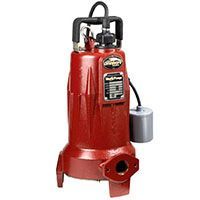
The main difference between a grinder pump and other waste removal pumps is that a grinder pump can, as the name suggests, grind solid waste into slurry. These pumps can be used for residential construction, and are particularly helpful in commercial applications, such as restaurants and public restrooms, where gloves, diapers, and small bones may find their way into the plumbing. These types of detritus would clog ordinary sewage pumps, requiring expensive repairs, but a grinder pump can easily reduce troublesome solids into easily managed slurry.
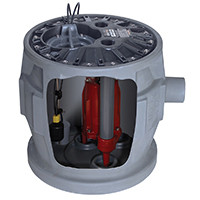
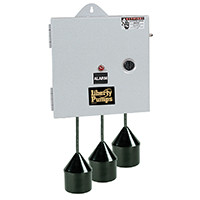
Grinder pumps are usually installed at the lowest waste collection point, usually a basement, or outside. However, if the pump is to be installed out of doors, it is imperative that the holding tank is deep enough to ensure that the pump and sewage pipes are below the frost line. Grinder pumps are available with either manual or automatic operation. Automatically operated pumps usually feature a float switch to activate the pump once the water reaches a pre-set level.
Little Giant Grinder Pumps
Little Giant, a subsidiary of Franklin Electric, has made a name for itself as a global manufacturer of reliable water systems. All Little Giant pumps are tested before distribution, ensuring their products’ quality and dependability. Little Giant grinder pumps are designed to handle large solid waste, such as diapers, pieces of cloth, small bones, etc. These pumps are suitable for residential or commercial use, and are available in either automatic or manual operation. Automatic Little Giant grinder pumps usually feature either a mechanical or a wide-angle float switch, which activate the pump when the waste reaches a pre-set level in the holding tank, the grinder pump will turn on and grind the waste, which will then be pumped into the central sewer system.
Liberty Grinder Pumps
Based in New York, Liberty Pumps has become a nationally recognized provider of quality pumps. Their Liberty Omnivore series of grinder pumps are designed for residential and commercial applications, where solids need to be ground into slurry before being passed to a drain field or sewer main. Liberty’s Omnivore pumps are suitable for applications that require continuous operation, whether in a small setting, such as a home, or in a large establishment such as a commercial mall or public restroom. The Omnivore grinder pumps are available as either automatic or manually operated grinder pumps; automatic pumps feature a piggyback float switch, which can be removed for manual control of the pump.
Types
Manual
Manual grinder pumps need to be turned on and off before and after each cycle. Automatic pumps with piggyback float switches can be run manually if the switch is bypassed.
Automatic
Automatic pumps rely on different types of switches, the types of which are outlines below:
Mechanical (vertical) float switch
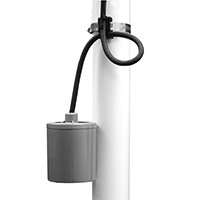
Some grinder pumps have mechanical, also called vertical, float switches. These switches consist of a freely-sliding float, which rises with the water; when the water reaches a pre-set level, the float moves into position and triggers the internal switch, which activates the pump. As the water level drops, the float returns to its resting position, and the pump is turned off.
Wide angle float switch
A wide angle float switch is composed of a chamber with a set of contacts and a floating ball, resting on the surface of the water. As the water level rises, the float moves with it, and the ball moves toward the contacts until it slides into the position between them, which activates the pump. As the water level decreases, the float moves down with it, and the ball slides out of the active position, which turns the pump off. The switch must be cleaned periodically, as dirt may accumulate in and around the float. Should enough dirt build up, the float will be weighed down in the water, unable to rise with the water level, which will prevent it from activating the grinder pump.
Sizing
To accurately size a grinder pump, it is necessary to calculate the required system capacity and total dynamic head.
Using the “fixture unit” method to calculate system capacity simply involves counting the number of water fixtures within the structure. Each structure has an individual unit value; to determine the total fixture units, the fixture’s unit value is multiplied by the number of fixtures in the home. The graph below can be used to reference the system capacity: